January 2026 Excellence in Action: Pwani Animal Wefare
GARC’s Rabies Centers of Excellence (RCE) form part of our Communities Against Rabies initiative. Through our Excellence in Action series, we want to showcase the incredible work that these RCEs do to eliminate rabies in their communities. For this month’s Excellence in Action, we are proud to share the work of Pwani Animal Welfare (PAW) Organization, Kenya.
PAW is a dedicated animal rescue and welfare group based in Mombasa, Kenya. They focus on rescuing, rehabilitating, and rehoming sick, injured, and abandoned cats and dogs, while also promoting responsible pet ownership. They create awareness through education campaigns where they promote animal welfare through spaying/neutering advocacy, as well as emphasizing the importance of general care. They are passionate about achieving their vision and believe that they need to advocate to change ordinances and create favorable changes to the community, its animals and the environment, one individual at a time.
GARC spoke to Dr. Mohammed Umlai, Chief Veterinary Officer, about the important work they do.

Tell us more about who you are and where you work?
We are a community-based organization dedicated to creating communities that make animal welfare, climate justice, and environmental sustainability their responsibilities. We follow a One Health Approach: Healthy People, Healthy Animals and Healthy Environment. We mainly work in Mombasa County in the Republic of Kenya, with most of our activities focusing on mass rabies vaccination, education and TNVR campaigns. Most of our activities are always in collaboration with two key stake holders, namely
- The Kenya Veterinary Association – Coast branch, and
- The veterinary division of the County Governments of Mombasa and Kwale (when we have been officially invited).
We are also extremely grateful for the support we have received from private clinic and clinicians.
What are your biggest challenges in working as an RCE?
Financial and infrastructural support has been our main challenges:
- At PAW Mombasa, our team works tirelessly to rescue, treat, and neuter street cats, often in challenging conditions. Currently, we rely on limited and worn-out equipment to safely capture cats in need of medical attention or sterilization. This makes our rescue operations difficult and sometimes unsafe for both the animals and our team. We have been appealing to well-wishers for their support to help us purchase humane cat traps and nets, which are essential tools for effective and compassionate rescues. With the right equipment, we can reach and treat more cats, reduce stray populations, and improve overall community and animal health.
- Cruelty against neonatal cats: We continue to speak out against abandonment and cruelty. We had a case where a tiny kitten was abandoned in an alley, who died because someone chose to look away. Every life matters and we will keep advocating for the voiceless.
- Cruelty against adult cats: We get horrific cruelty cases involving cats, especially with burn wounds. We had a case of a mother with a large abdomen burn that required multiple surgeries and extensive recovery before she could be released into safe territories. These are symptoms of deeper problems in how we, as a society, perceive and value animal life. These acts underscore the urgent need for our community awareness campaigns.
- More cancer cases amongst street cats: We have also seen an alarming increase in cancer diagnoses in older street cats. From ear tumors to oral cancers, these conditions are often discovered too late, after the animal has already endured prolonged pain. This raises urgent questions for us:
- Are there carcinogenic pollutants in our urban environments?
- Are cats, as scavengers and survivors, absorbing the worst of our waste and negligence?
As we fight for cleaner cities, we must include animal health in environmental risk assessments.
Most of our activities are supported by selfless individuals, who dedicate their financial support, time, and energy to ensure every event and activity is a success.
Why did you want to be a GARC Rabies Centre of Excellence?
We have previously partnered with GARC to translate the Want a Friend, Be a Friend booklet into Swahili. This booklet has proven very useful in our community outreach and school programs. Our recognition as a GARC RCE has supported us to advocate for a One Health approach in our activities. This now gives us the credibility and the technical support we need to expand our activities.
Access to the GARC Data Platform has also given us an advantage, especially in monitoring our activities like being able to track our vaccination coverage. Being able to support our applications for resources based on data-driven evidence, has given us a tremendous advantage in seeking support from the County Government of Mombasa. We also host annual World Rabies Day (WRD) celebrations in this region. We are also planning to register our organization as a Public Benefit Organization and expand our activities to the entire coastal region.
Do you have any campaigns that you want to highlight for 2025?
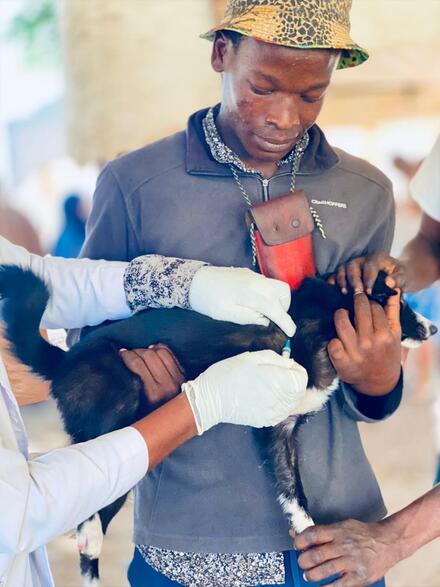
- Our biggest campaign for 2025 was our WRD Celebrations in Mombasa County, held at Makadara Grounds on 5 October. We managed to vaccinate a total of 309 animals: 266 cats and 43 dogs. This has grown since the year 2020, with strong collaboration with the Veterinary division of Mombasa County Government and KVA Coast branch.
- We have a strong ongoing partnership with Mavuno Ya Bahari in Jomvu through continuous mangrove restoration activities and youth leadership initiatives. By restoring mangrove ecosystems, we not only protect marine life and coastal biodiversity but also improve air and water quality, support community livelihoods, and build climate resilience. Engaging local youth in these activities empowers the next generation to become custodians of their environment, fostering a sense of shared responsibility for the health of our planet and all who depend on it.
- We successfully completed a Trap-Neuter-Vaccinate-Release (TNVR) and relocation activity at Sai Rock and Milele Beach Hotels, demonstrating how businesses can manage community cat populations humanely: A model we encourage all local businesses to adopt.
- At the community level, we have established links with individuals who take care of free-roaming community owned cats (colonies), where we offer free rabies vaccination, treatment, neutering services and not forgetting community awareness, depending on availability of resources.
- We produced essential Swahili awareness videos on the importance of neutering and why cow's milk is dangerous for cats. We also tackled the harmful superstition surrounding black cats and the cruelty it causes. We concentrated on treatments of street cats in alleys with our volunteer vets, bridging the gap between community and streets cats.
- Our Executive Director represented PAW and the Coast of Kenya at the AVA Summit 2025, sharing her unique perspective as the first Swahili woman activist to champion the One Health approach on a global stage.
- Our One Health Youth Club in Eman Girls High School was highly active, championing the interconnectedness of human, animal, and environmental well-being. Through facilitated sessions on rabies awareness, plastic pollution, and climate change, we empowered 60 young girls to be part of the solution.
- For 2026 we are planning to collaborate with the County Government of Kwale through their Veterinary Division and other partners. Some of the activities we are planning include mass rabies vaccination campaigns, TNVR, and community awareness programs.

How have you used the GARC resources in your community?
GARC’s digital surveillance and tracking tools, through the GARC Data Platform has been of great help to us in collecting, analyzing, and visualizing our data for the purposes of reporting reliable evidence on vaccination coverage. The GARC Data Platform has helped us to improve how we track our progress, and demonstrate the impact of rabies vaccination on reducing dog-mediated human rabies (in our community we have cat-mediated human rabies as well) to the county governments, partners and community.
We cannot underscore the importance of GARC’s printed awareness resources, especially the flyers, posters, and school booklets. We use the Swahili versions, and these have been crucial for teaching hundreds of children and their families about rabies, bite prevention, responsible cat/dog ownership, and the importance of seeking immediate medical help. GARC’s support has been fundamental to our successful impact.
The Communities Against Rabies initiative is supported by Battersea Dogs and Cats Home and Boehringer Ingelheim.