January 2026 Champion in Action: Shaeleigh Wuollet
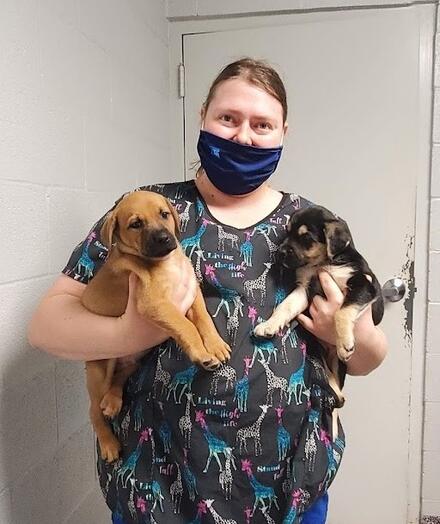
To kick off 2026, we are proud to introduce you to Shaeleigh Wuollet, a veterinary student from the United States (US) and Bronze Dog Health Champion. Her passion for animals, resilience through personal and academic challenges, and commitment to helping underserved communities embody the ethos of a true Champion in Action. Her path to rabies work was winding but each twist and turn has strengthened her conviction that rabies is both a solvable problem and a meaningful calling.
GARC’s Outreach Director, Kerenza Vlastou, spoke to Shaeleigh about where her love for animals comes from and how she is making a difference through her work.
Shaeleigh, can you start by telling us a bit about yourself and your background with animals?
I have loved animals for as long as I can remember. I grew up in a US military family and we moved, on average, every 18 months, sometimes every year, and animals tended to “come and go.” But I held on to my Cocker Spaniel, Patches, with all my might, and he became a constant in an otherwise constantly changing childhood. I have always been the “animal person” in my family.

What first drew you toward rabies work?
When I started working in a veterinary clinic, I learned about the Zero by 30 initiative. It bothered me that involvement seemed restricted to veterinary students, and I felt like there must be a way for people like me (working in the clinic as a veterinary assistant) to contribute. In the US, many people do not realize that we only eliminated dog-mediated rabies in 2007: Less than two decades ago! We have very short memories when diseases become rare, and I started using every opportunity to educate clients about why rabies vaccination matters.
It was not until I joined a USDA emergency response team, and later began my Master’s research, that I became deeply interested in global rabies control. That is where I crossed paths with Dr. Jerlyn Sponseller from Mara North Conservancy, and, eventually, GARC.
Your research led you to Kenya. Can you tell us about your involvement there?
Yes! I assisted remotely with transcription and data organization for a mass dog vaccination effort. The team vaccinated more than 9 000 animals, which is extraordinary compared to the 10–30 vaccinations a typical US clinic might do in a day. I had to review handwritten records, often switching between English and Swahili. The biggest challenge I saw, something that is true globally, was patient identification. Without reliable ways to identify animals, it becomes difficult to ensure they are revaccinated each year (as required in Kenya). My role gave me insight into the real barriers on the ground: hesitancy towards using new technology, gaps in communication, and the sheer effort required to reach communities far off the usual safari routes.
One of the funniest things I noticed was that many dogs had the same names, often in the same household. “Simba 1” and “Simba 2” and “Rex” were everywhere!
From your clinic work in the US, what challenges do you see around rabies elimination there?
One major challenge is that rabies regulations differ not only between states, but even between counties. For example, I live in Hays County, Texas, which accepts the three-year vaccination schedule. But the neighboring county, Travis, requires annual vaccinations. People often do not keep their records, do not remember which vet they saw, or do not know the rules where they have moved from, which makes enforcement difficult and increases the risks. There is also a lot of misinformation. Many people believe their dog “never meets wildlife,” but raccoons and bats certainly prove otherwise! I live near Austin (known as Bat City) so interactions are more common than people imagine.
What motivates you to keep working in rabies elimination?
I was raised with the belief: If you see a need, you fill it. Rabies is the perfect example of a problem that is simple but complex. Simple because it is preventable, and complex because people, systems, beliefs and resources differ everywhere.
I love connecting the dots between causes and consequences. History, behavior, clinical work, it all comes together in rabies. Even if we do not reach the global goal of Zero by 30, we will get there eventually. And I want to be part of that process.
Looking back on your experience in Kenya, what stayed with you the most?
The dedication of the teams working far from tourist areas really struck me. These are places with very little access to veterinary care or medical facilities. Reaching them is harder but also more essential. It also reinforced how important communication, trust, and clear systems are in rabies elimination. Vaccines alone are not enough; you need education, identification, follow-up, and local capacity.
Who would you like to thank for shaping your rabies journey so far?
- Dr. Jerlyn Sponseller, who introduced me to Kenya’s work and opened the door to the field.
- Dr. Alison Robbins, my graduate advisor, who encouraged my interest in rabies and wildlife health and helped guide my academic path.
- My mother, Brandy Wells, who supported me through all the challenges of applying to vet school and served as the first editor of my enormous case study!
- And, of course, the GARC team, whose training and resources showed me that even small actions can open unexpected doors.
Truly, I never imagined that taking a free online course would lead to a 60-page rabies case study, Kenyan field data, and a future in global health.

Shaeleigh represents exactly what the global rabies community needs: determination, compassion, and a willingness to work across borders and disciplines. We look forward to following her journey through veterinary school and beyond.
The Communities Against Rabies initiative is supported by Battersea Dogs and Cats Home and Boehringer Ingelheim.