December 2025 Excellence in Action: Lucas Helps Dogs
GARC’s Rabies Centers of Excellence (RCE) form part of our Communities Against Rabies initiative. Through our Excellence in Action series, we want to showcase the incredible work that these RCEs do to eliminate rabies in their communities. For this month’s Excellence in Action, we are proud to share the work of Lucas Helps Dogs, Sri Lanka.
‘Lucas Helps Dogs’ is a small charity founded in 2019 to help street dogs and cats in Sri Lanka. One of their key goals is to promote animal welfare within local communities. They are currently developing their own education program, working with hotels and schools in Sri Lanka to raise awareness about animal welfare. One of their core missions is to create change. They regularly host hold pop-up spay and neuter clinics in areas that other charities do not reach. They also research remote areas of Sri Lanka to identify where communities need the most help. They are entirely volunteer-run, and all donations go straight to the dogs and cats who need it most.

Tell us more about who you are and where you work.
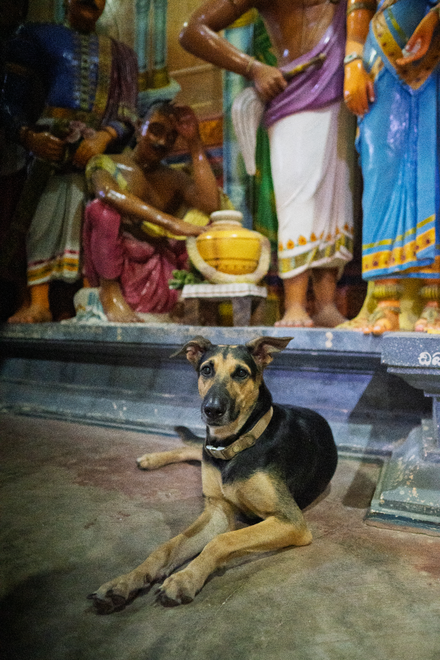
Lucas Helps Dogs is a small, volunteer-run charity working in Sri Lanka to improve the lives of street and community animals. We operate mainly in Hikkaduwa and surrounding areas, though our work often reaches remote villages where access to veterinary care is extremely limited. Our main focus is Catch–Neuter–Vaccinate–Return (CNVR). We run regular clinics, as well as pop-up clinics in rural communities.
In addition to CNVR, we provide emergency medical treatment to injured or sick street animals, and we offer free spay/neuter services to pets belonging to low-income families who would otherwise be unable to afford care. We also provide daily feeding for street dogs and are in a process of developing educational programs, especially for schoolchildren and at-risk communities. These sessions will promote kindness to animals, responsible pet ownership, rabies prevention, and the importance of spaying and neutering.
What are your biggest challenges in working as an RCE?
Our biggest challenges fall into two main focus areas:
- internal (operational), and
- external community-level barriers.
Internally (operational): Our main difficulty is managing the data required for the rabies reporting system. Many of our CNVR clinics take place in remote areas without internet access, so all information must be recorded manually in the field. This leads to a backlog of paperwork once we return. As a small, volunteer-run organisation, we currently lack enough administrative support to input and upload this data promptly, and we are in a process of finding volunteers to help us manage the workload.
External community-level barriers: One of our biggest day-to-day challenges is community engagement. Many local people are still hesitant to help with catching community dogs for CNVR, often because they are unsure about what we are doing or worried about getting bitten. There is still limited understanding that spaying, neutering, and vaccinating are the only humane and effective long-term ways to reduce the number of street dogs and keep rabies under control. Misconceptions, cultural beliefs, and a general lack of access to animal welfare education mean that we often have to spend extra time building trust and explaining why this work matters, especially in rural areas where awareness is the lowest.
Why did you want to be a GARC Rabies Center of Excellence?
We wanted to become a GARC Rabies Center of Excellence because it shows that the work we do every day really makes a difference. For a small, volunteer-run charity like ours, this recognition means the world. It proves that our efforts to spay, neuter, and vaccinate dogs and cats, and to prevent rabies in the communities we work in, are truly helping keep both people and animals safe.
Being recognized by GARC also gives us credibility. For our small team, the support and guidance we receive from GARC makes a huge difference. It helps us improve our clinics, reach more dogs and cats, and we feel less alone in the difficult work of trying to keep rabies out of the communities.

Do you have any campaigns that you want to highlight for 2025?
For 2025, the campaign we want to highlight most is our ongoing monthly CNVR clinic in Hikkaduwa. This clinic is really the most important part of our work. Every month, we spay/neuter and vaccinate street and community dogs and cats. Over time it has made a huge difference, not just for the animals, but for the whole community.
When we first started, many people were unsure or hesitant. But now, after two years of consistent work, local residents can see the results with their own eyes. The street animals are healthier, there less puppies and kittens struggling to survive, and the overall health of dogs and cats in the area has noticeably improved. This has even had a positive impact on local businesses, especially those that rely on tourism, because tourists do not want to see suffering animals. During tourist season, we receive many messages and e-mails from travellers commenting on the improved situation in Hikkaduwa and how much better the area is compared to the other parts of Sri Lanka.
The most rewarding part is seeing how the community has changed. People are now helping us catch animals, spreading the word, and working alongside us. It feels like a real partnership, and it is one of our biggest achievements.
How have you used the GARC resources in your community?
We have used GARC’s resources to better explain rabies to local communities. What it is, why it is dangerous, and how vaccination prevents it. This has really helped us during our clinics, making it easier for people to understand. We plan to use even more of GARC’s tools as we continue expanding our awareness and community programs.
The Communities Against Rabies initiative is supported by Battersea Dogs and Cats Home.